Why This Guide? Because Mass Tort Law Firms Need More Than Just Ads — They Need a Strategic, ROI-Driven Digital Engine
If you’re running a Mass Tort law firm or are a Mass Tort lawyer looking to scale your practice in the USA, UK, or Australia, you already know that competition is fierce. But here’s the truth:
Most firms are still using outdated digital tactics — and losing millions in potential cases because of it. That’s why understanding the right key marketing channels and strategies for mass tort lawyers is non-negotiable in today’s landscape.
This isn’t just another “how to do SEO for lawyers” article.
This is your 2026 battle-tested blueprint — crafted by TGC Digital, a top-tier Mass Tort law firm marketing agency — to help you dominate search rankings, attract high-intent clients, and convert traffic into case wins.
We’ve helped dozens of Mass Tort lawyers and firms across the US, UK, and Australia generate over $15M+ in new case revenue through data-driven, compliant, and conversion-optimized digital strategies.
Let’s get you there — fast.
Uderstanding User Intent: Who Are You Really Targeting?
Before we dive into tactics, let’s align with real user intent.
When someone searches for:
“Mass Tort law firm Marketing”
“Mass Tort lawyer digital marketing company”
“Mass Tort law firm marketing agency”
…they’re not looking for generic advice.
They’re likely one of these:
- A law firm owner or marketing director trying to scale case volume
- A partner or attorney frustrated with low ROI from current agencies
- A startup mass tort practice needing a full-stack digital partner
- An in-house legal marketer researching performance-based agencies
Your goal? Be the answer they find — and the trusted partner they hire.
What is Mass Tort Marketing?

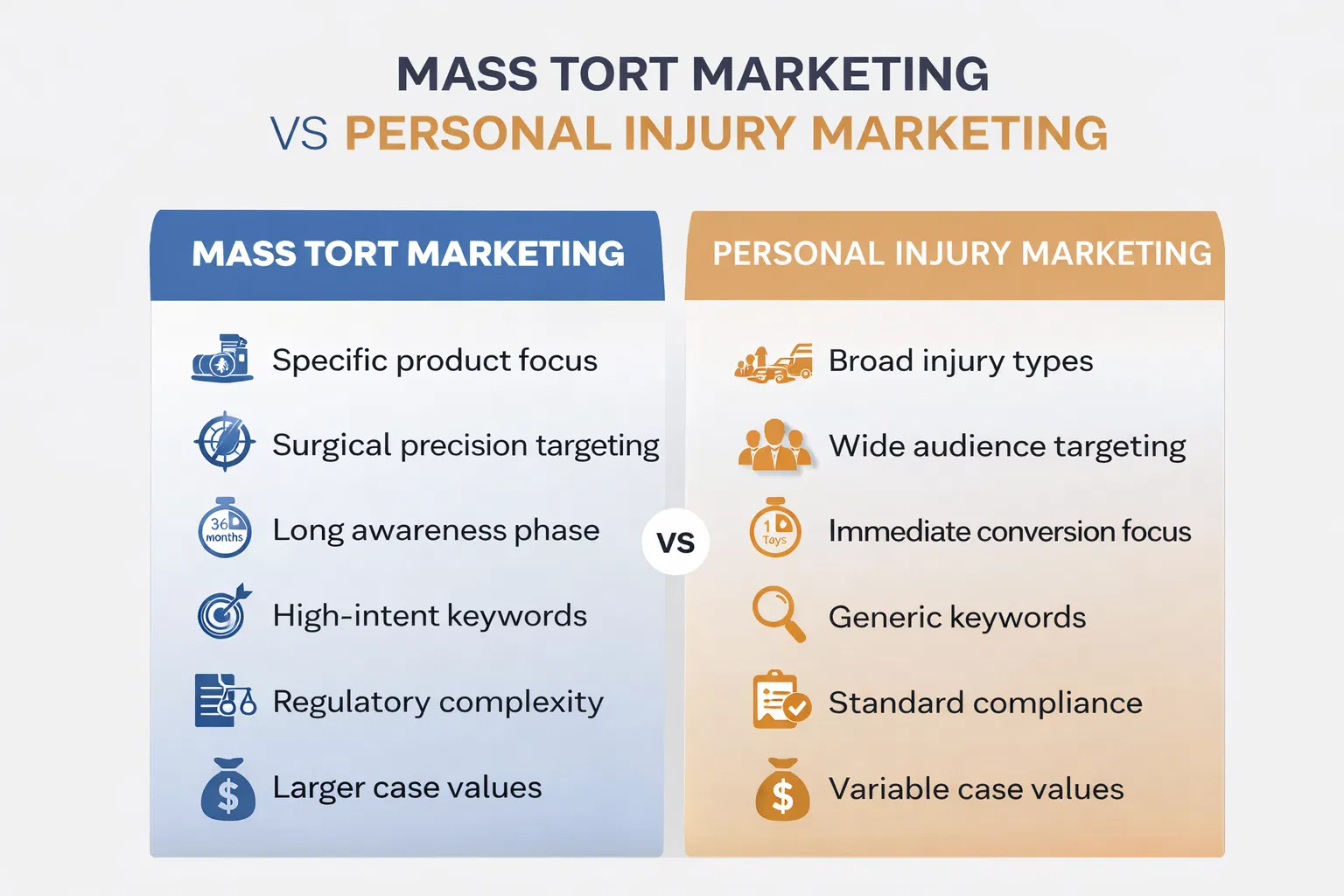
Mass Tort Marketing vs Personal Injury Marketing
The Three Core Mechanisms of Mass Tort Marketing
Class Action Marketing vs Mass Tort Marketing
The Evolution of Mass Tort Marketing
Understanding Defective Product Marketing
The Strategic Importance of Mass Tort Marketing
The State of Mass Tort Marketing in 2026: Data That Can’t Be Ignored
According to recent data from Legal Marketing Association and ABA Legal Technology Survey:
- 78% of plaintiffs in mass tort cases begin their journey with a Google search — often typing phrases like “mass tort lawyer near me” or “how to join a class action lawsuit”
- Only 12% of law firms have a dedicated digital marketing strategy for mass torts — leaving massive opportunity for early adopters
- Firms using video testimonials + localized landing pages see 3.5x more case inquiries than those relying on static text-only sites
- PPC campaigns targeting long-tail keywords like “mesothelioma lawyer for veterans” or “talcum powder lawsuit compensation” convert at 4.2% vs. industry avg of 1.8%
These aren’t trends — they’re signals. And if you’re not acting on them, your competitors are.
Giding Principles for Mass Tort Marketing Success
Principle 1: Lead Awareness is Your Primary Barrier
Principle 2: Timing is a Competitive Advantage
Principle 3: Precision Targeting Reduces Waste
Principle 4: Compliance is Non-Negotiable
Principle 5: Education Builds Authority
The Core Pillars of Effective Mass Tort Law Firm Marketing
1. Precision-Targeted Paid Advertising (PPC)
Paid search remains the fastest channel to capture high-intent traffic. However, success hinges on strategic keyword structuring and compliance safeguards.
Mass tort plaintiffs rarely search for generic terms like “personal injury lawyer.” Instead, they use long-tail, condition-specific queries:
- “Roundup weed killer non-Hodgkin lymphoma lawsuit”
- “Hip replacement metallosis attorney California”
- “Zantac stomach cancer class action lawyer”
To maximize ROI:
- Use exact-match and phrase-match keywords in Google Ads to avoid irrelevant impressions.
- Create dedicated ad groups for each drug/device (e.g., one group for “Invokana kidney failure,” another for “Elmiron vision loss”).
- Implement negative keywords such as “settlement amount,” “how much money,” or “free calculator” to filter out speculative traffic.
- Ensure all landing pages include required disclaimers: “Past results do not guarantee future outcomes,” and “No attorney-client relationship is formed until a retainer is signed.”
Campaigns should be geo-targeted to jurisdictions where your firm is licensed and actively litigating. Bid adjustments can prioritize states with higher case volumes or favorable legal precedents.
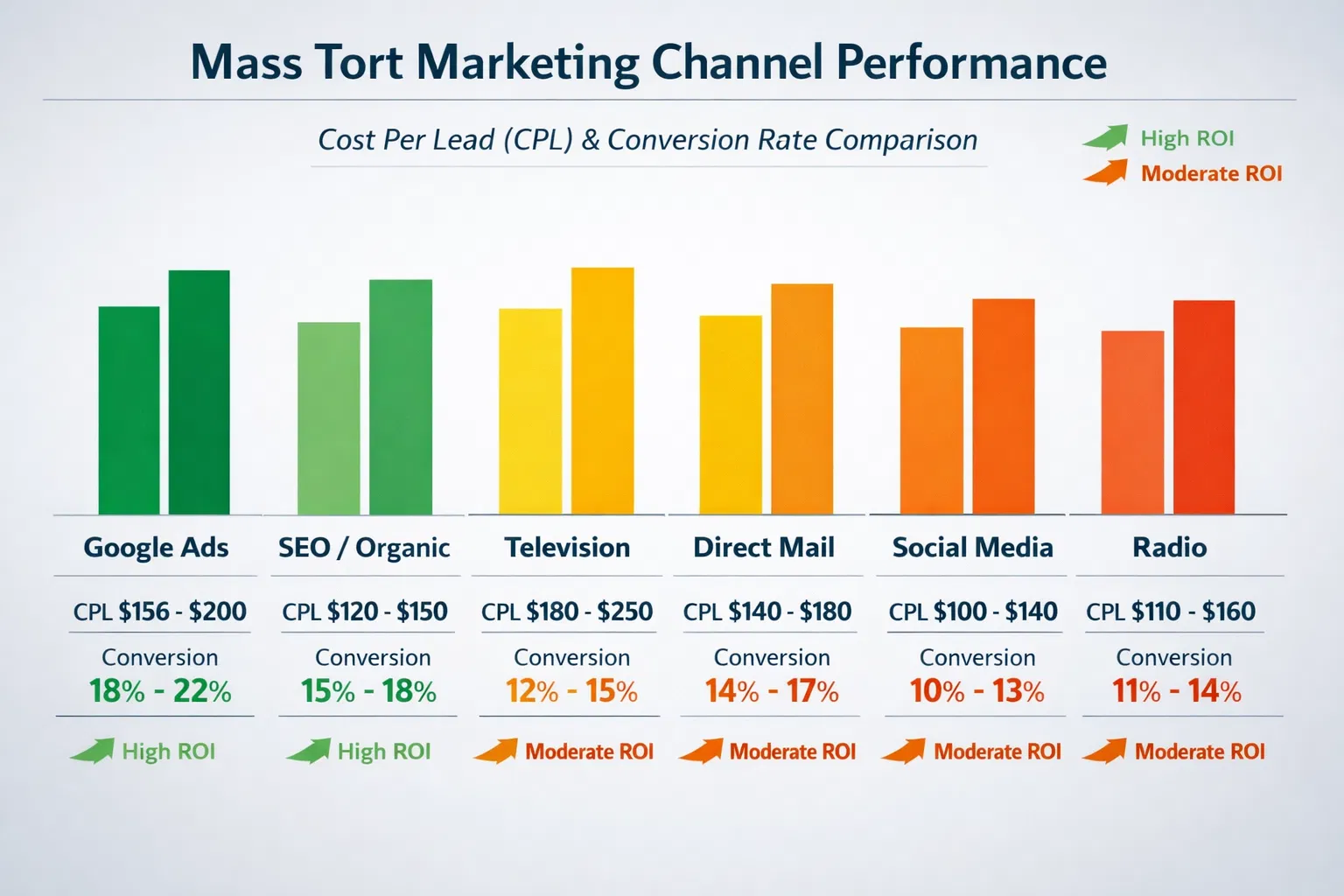
Data from WordStream’s 2025 Legal PPC Benchmarks shows that compliant, niche-focused mass tort campaigns achieve cost-per-lead (CPL) rates 35% lower than broad personal injury campaigns—while converting at nearly double the rate.
2. Compliance-First Organic SEO & Content Strategy
Google prioritizes E-E-A-T (Experience, Expertise, Authoritativeness, Trustworthiness) for legal content—a critical factor under the MUVERA algorithm. To rank for “Mass Tort law firm marketing” and related terms, your website must demonstrate deep subject-matter authority.
Key tactics include:
- Publishing comprehensive, medically accurate guides (e.g., “What Is NDMA? How It Causes Cancer in Zantac Users”).
- Featuring attorney bios with verifiable credentials, bar admissions, and case experience.
- Citing authoritative sources such as the FDA, CDC, or peer-reviewed journals when discussing health risks.
- Optimizing for voice search and featured snippets by answering common questions in clear, concise formats:
“Can I file a lawsuit for Elmiron-related vision damage?” → Answer directly in paragraph or bullet form.
Technical SEO is equally vital:
- Ensure mobile responsiveness (over 68% of legal searches occur on smartphones).
- Improve page speed (aim for <2s load time via image compression and caching).
- Implement structured data (FAQPage and Article schema) to enhance visibility in rich results.
Internal linking between related content—such as connecting a page about “3M Combat Arms Earplug Litigation” to a broader “Veterans Mass Tort Guide”—strengthens topical authority and keeps users engaged longer.
3. Multi-Channel Lead Nurturing Systems
Most mass tort leads are not ready to commit immediately. A robust nurturing system bridges the gap between initial contact and case intake.
Effective components include:
- Automated email sequences: Triggered after a user downloads a case guide or submits a contact form. Sequence example:
Day 1: “Understanding Your Rights in a Valsartan Lawsuit”
Day 3: “Common Questions About Drug Injury Claims”
Day 7: “Schedule a Free, No-Obligation Consultation” - Retargeting ads: Display educational content or consultation offers to users who visited drug-specific pages but didn’t convert.
- Live chat with qualification logic: Use AI-powered chatbots to ask preliminary questions (e.g., “What medication were you prescribed?” “When did you experience symptoms?”) before routing to intake staff.
Firms using integrated nurturing see conversion rates increase by 200–300% compared to those relying solely on phone follow-ups.
4. Reputation Management & Social Proof
Online reviews significantly influence plaintiff decisions. A 2025 BrightLocal survey found that 87% of consumers read reviews for professional services—and 73% form an opinion after reading just 3–5.
Best practices:
- Encourage satisfied clients to leave Google Reviews and Avvo ratings—only after case resolution and with clear instructions to avoid confidential details.
- Never offer incentives for reviews (a violation of ethics rules).
- Monitor review platforms and respond professionally to all feedback, including negative comments.
- Showcase testimonials on service pages with proper disclaimers: “Results vary; testimonials are not indicative of future outcomes.”
5. Proactive Market Intelligence Using AI & Data Tools
Top mass tort firms don’t just react to trends—they anticipate them. By leveraging AI and public data, you can identify emerging litigation opportunities before competitors.
Sources to monitor:
- FDA MedWatch alerts for new drug safety warnings
- CPSC recalls for defective consumer products
- EPA contamination reports for environmental exposure zones
- Google Trends spikes for terms like “Ozempic side effects” or “Tylenol autism lawsuit”
Tools like SEMrush, Ahrefs, and Exploding Topics can flag rising search volumes weeks in advance. Launching compliant landing pages and PPC campaigns during this early window captures low-competition, high-intent traffic.
Traditional Marketing Channels for Mass Torts
Television and Infomercials
Radio Advertising
Print Advertising
Direct Mail
Integrated Traditional and Digital Strategy
Emerging Mass Tort Opportunities in 2026

The landscape of mass tort litigation is constantly evolving. New products are introduced, new health risks are discovered, and new litigation opportunities emerge. Firms that can anticipate these trends—and launch marketing campaigns before competitors—capture the highest-quality leads at the lowest cost.
Pharmaceutical and Biological Product Litigation
GLP-1 Receptor Agonists (Ozempic, Wegovy, Mounjaro)
The rapid adoption of GLP-1 receptor agonists for weight loss and diabetes management has created a significant litigation opportunity. Reports of adverse effects—including thyroid cancer, pancreatitis, and gastroparesis—have led to multiple lawsuits. As of early 2026, litigation is still in early stages, creating an opportunity for firms to establish market position before competition intensifies.
Emerging Litigation Characteristics:
- Large population of users (millions globally)
- Significant adverse effects reported
- Regulatory scrutiny from FDA
- Early-stage litigation with limited precedent
- High settlement potential due to manufacturer liability
Marketing Implications: Firms entering this space should emphasize expertise in pharmaceutical litigation, understanding of GLP-1 mechanisms, and ability to identify qualifying claimants. Content marketing should focus on educating potential claimants about adverse effects and their legal rights.
SGLT2 Inhibitors (Empagliflozin, Dapagliflozin)
Similar to GLP-1 agonists, SGLT2 inhibitors have been linked to adverse effects including diabetic ketoacidosis and urinary tract infections. Litigation is emerging in 2026, creating an opportunity for early-mover firms.
Biologics and Immunotherapy Complications
As biologics and immunotherapy become more common, adverse effects are being documented. Firms with expertise in complex pharmaceutical litigation can position themselves to capture this growing market.
Medical Device Litigation
Artificial Intelligence-Assisted Medical Devices
As AI-assisted medical devices proliferate, failures and adverse effects are being documented. Devices that fail to perform as intended or that cause patient harm create litigation opportunities. Firms that understand AI technology and medical device regulation can position themselves as experts in this emerging area.
Orthopedic Implant Failures
While orthopedic implant litigation is not new, emerging technologies and new failure modes continue to create opportunities. Firms should monitor FDA MedWatch databases for new device failures and emerging patterns.
Environmental and Occupational Exposure Litigation
PFOA/PFAS Contamination
“Forever chemicals” (PFOA, PFAS) are increasingly recognized as environmental and health hazards. Contamination of water supplies and soil in multiple states has led to litigation. As awareness grows, litigation opportunities will expand.
Emerging Litigation Characteristics:
- Widespread environmental contamination
- Long latency period for health effects
- Multiple potential defendants (manufacturers, industrial users, municipalities)
- Growing regulatory scrutiny
- High settlement potential
Workplace Exposure to Emerging Chemicals
As industrial processes evolve, workers are exposed to new chemicals. Firms should monitor OSHA reports and workplace injury databases for emerging exposure patterns.
Consumer Product Litigation
Defective Consumer Electronics
As consumer electronics become more complex, defects and safety issues are emerging. Battery failures, fire hazards, and other defects create litigation opportunities.
Cosmetics and Personal Care Products
Adverse effects from cosmetics and personal care products continue to generate litigation. Firms should monitor FDA adverse event reports and consumer complaints for emerging patterns.
How to Identify and Capitalize on Emerging Opportunities
Monitor Regulatory Agencies
The FDA, CPSC, EPA, and OSHA are primary sources of information about emerging health and safety risks. Firms should:
- Subscribe to FDA MedWatch alerts for medical device failures
- Monitor CPSC recalls for consumer product defects
- Track EPA contamination reports for environmental exposure
- Review OSHA citations for workplace exposure patterns
- Monitor state health department reports for emerging health risks
Use AI and Data Analytics Tools
Tools like Google Trends, SEMrush, Ahrefs, and Exploding Topics can identify rising search volumes and emerging topics. Firms should:
- Monitor search volume trends for product names and health conditions
- Identify emerging keywords related to adverse effects
- Track competitor activity and emerging litigation
- Use AI to identify patterns in adverse event reports
Engage with Medical and Scientific Communities
Firms should maintain relationships with medical experts, researchers, and public health professionals who can provide early warning about emerging health risks. Attending medical conferences, reading medical journals, and engaging with expert networks can provide valuable insights.
Develop Rapid Response Capabilities
Once an opportunity is identified, firms should be able to launch marketing campaigns quickly. This requires:
- Pre-developed landing page templates
- Pre-written ad copy and email sequences
- Relationships with media buyers and SEO specialists
- Compliance review processes that can be executed quickly
- Lead intake systems that can handle volume surges
Balance Opportunity with Expertise
While emerging opportunities can be lucrative, firms should only pursue cases where they have genuine expertise or can quickly develop it. Pursuing cases outside your expertise creates compliance risks and can damage your reputation.
Common Pitfalls in Mass Tort Lawyer Digital Marketing
Even well-intentioned firms make critical errors:
- Overpromising results: Phrases like “guaranteed compensation” violate ABA Rule 7.1.
- Ignoring jurisdictional limits: Running ads in states where the firm isn’t licensed risks disciplinary action.
- Using stock imagery: Generic photos of gavels or handshakes erode trust. Use real team photos and case-specific visuals.
- Neglecting mobile UX: Slow-loading or poorly formatted mobile pages increase bounce rates by over 50%.
Avoiding these mistakes isn’t just about compliance—it’s about building long-term credibility with both users and search engines.
How to Choose the Right Mass Tort Marketing Agency
Selecting the right mass tort marketing agency is one of the most critical decisions a law firm can make. The wrong agency can waste resources, damage your reputation through compliance violations, or fail to deliver qualified leads. The right agency becomes a strategic partner that understands your practice, your market, and your growth objectives.
Understanding Your Needs Before Selecting an Agency
Before evaluating mass tort legal marketing companies, firms should clarify their own objectives. Are you launching a new mass tort practice and need help establishing infrastructure? Are you an established firm looking to expand into new case types? Are you struggling with lead quality from your current provider? Your answers to these questions should guide your agency selection process.
Firms should also assess their current capabilities and gaps. Do you have in-house marketing expertise? Do you have compliance infrastructure in place? Do you have relationships with media buyers and SEO specialists? Understanding what you can do internally versus what you need external support for will help you identify the right agency partner.
Key Criteria for Evaluating Mass Tort Marketing Agencies
Deep Understanding of Mass Tort Law and Litigation
The most critical criterion for selecting a mass tort marketing company is whether they truly understand mass tort law and litigation. This goes beyond general legal marketing knowledge. The agency should understand the differences between mass torts and personal injury cases, the regulatory landscape for specific case types, the typical litigation timeline, and the factors that drive case valuations.
Ask potential agencies: “What mass tort cases have you worked on? What was the outcome? How did you approach the marketing strategy differently than you would for personal injury cases?” Their answers will reveal whether they have genuine mass tort expertise or are simply applying generic legal marketing tactics.
Compliance Track Record and Ethical Standards
Mass tort marketing operates in a heavily regulated environment. The agency you select must have a strong compliance track record and deep knowledge of ABA rules, state bar regulations, and ethics requirements. Ask about their compliance processes: Do they have an ethics attorney on staff? Do they conduct compliance audits of all marketing materials? Have they ever faced disciplinary action or complaints?
Request references from other law firms they’ve worked with and ask specifically about compliance. A firm that has never faced a compliance issue is more valuable than one with a perfect compliance record by luck.
Multi-Channel Expertise
The best mass tort marketing agencies don’t rely on a single channel. They understand how to integrate paid search, organic SEO, content marketing, social media, email marketing, and traditional media into a cohesive strategy. Ask potential agencies about their channel expertise and how they approach channel selection for different case types and target audiences.
Data-Driven Approach and Transparency
Evaluate whether the agency takes a data-driven approach to marketing. Do they establish clear KPIs before launching campaigns? Do they track and report on performance metrics? Do they adjust strategies based on data? Are they transparent about what’s working and what isn’t?
Request sample reports from campaigns they’ve run for other firms. These reports should clearly show metrics like cost per lead, lead quality, conversion rates, and ROI. If an agency is vague about metrics or resistant to sharing data, that’s a red flag.
Case Study Portfolio
Ask the agency to provide case studies demonstrating their success with mass tort marketing. Strong case studies should include: the case type, the target audience, the marketing channels used, the results achieved (leads generated, conversion rates, average case value), and lessons learned.
Be wary of agencies that can’t provide detailed case studies or that claim similar results across all case types. Mass tort marketing results vary significantly based on case type, market conditions, and timing. An agency that understands these nuances will provide case studies that reflect this complexity.
Communication and Reporting
Evaluate the agency’s communication style and reporting cadence. How frequently will they provide updates? What metrics will they report on? How accessible are they for questions and strategy discussions?
The best agencies provide monthly performance reports, conduct quarterly strategy reviews, and make themselves available for regular communication. They should be proactive in identifying problems and proposing solutions rather than simply executing campaigns and reporting results.
Red Flags When Evaluating Mass Tort Marketing Agencies
Several warning signs should trigger caution when evaluating potential agencies:
- Guarantees of results: No reputable agency can guarantee specific lead volumes or conversion rates. If an agency guarantees results, they’re either inexperienced or dishonest.
- Lack of compliance knowledge: If an agency can’t articulate how they ensure compliance with ABA rules and state bar regulations, they’re not qualified to handle mass tort marketing.
- One-size-fits-all approach: If an agency uses the same strategy for all case types and markets, they don’t understand mass tort marketing.
- Reluctance to share data: If an agency is vague about metrics or resistant to sharing performance data, they’re likely not delivering strong results.
- Limited case study portfolio: If an agency can’t provide detailed case studies demonstrating their success, they likely don’t have much success to show.
- High upfront costs with no performance component: While agencies should be paid for their work, the best partnerships include some performance-based component that aligns the agency’s incentives with your firm’s success.
Questions to Ask Potential Mass Tort Marketing Agencies
1.What mass tort cases have you successfully marketed? What were the results?
2.How do you ensure compliance with ABA rules and state bar regulations?
3.What channels do you recommend for our specific case type and target audience?
4.How do you approach lead quality versus lead quantity?
5.What metrics will you track and report on?
6.How frequently will you provide updates and strategy reviews?
7.What is your process for identifying and capitalizing on emerging mass tort opportunities?
8.Can you provide references from other law firms you’ve worked with?
9.How do you adjust strategy based on performance data?
10.What is your pricing model? Is there a performance-based component?
Measuring Success: KPIs That Matter
Track these metrics to evaluate performance:
- Cost per qualified lead (CPQL): Not just any form submit—leads that pass intake screening.
- Lead-to-client conversion rate: Percentage of leads that sign retainers.
- Organic visibility for drug/device keywords: Use tools like Moz or Ahrefs to monitor rankings.
- Time-to-convert: Average days from first touch to case acceptance.
- Compliance audit score: Regular internal reviews of ad copy, landing pages, and disclaimers.
Firms that align KPIs with business outcomes—not just vanity metrics—achieve sustainable growth.
Let’s Build Your Mass Tort Marketing Engine Together
You don’t need another agency that promises results but delivers vanity metrics.
You need a performance-driven, compliance-savvy, tech-enabled partner who understands the unique challenges of Mass Tort law firm marketing.
At TGC Digital, we’ve helped firms across the USA, UK, and Australia scale their case intake, reduce cost per lead, and build lasting brand authority.
Still Have Questions? Schedule a Free 30-Minute Strategy Call
Let’s discuss your goals, review your current efforts, and build a custom plan — no pressure, no pitch.
Final Thoughts: Mass Tort Marketing Isn’t Just About Traffic — It’s About Transformation
In 2026, the firms that win aren’t the ones with the biggest budgets.
They’re the ones with the smartest strategies, the deepest understanding of user intent, and the most ethical, compliant, and conversion-focused execution.
Whether you’re a solo practitioner or a multi-office firm, you can dominate your market — if you start today.
And if you’re ready to turn your digital presence into a high-converting, lead-generating machine…
About TGC Digital
TGC Digital is a full-service digital marketing agency specializing in legal industry marketing, including Mass Tort law firm marketing, personal injury SEO, and class action attorney digital campaigns. We serve clients across the USA, UK, and Australia with data-driven, ROI-focused strategies that deliver real results.